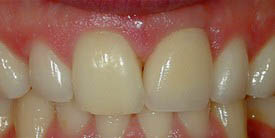
Signs & Symptoms of Periodontal Disease
Periodontal disease (also known as periodontitis and gum disease) is a progressive condition and the leading cause of tooth loss amongst adults in the developed world. Periodontal disease occurs when the toxins found in plaque begin to irritate or inflame the gingiva (gum tissue). The resulting bacterial infection often known as gingivitis, can eventually lead to the destruction of the gum tissue and underlying bone. If periodontal disease is not treated, it can also lead to loose teeth or tooth loss.
There are many common types of periodontal disease including aggressive, chronic, necrotizing periodontitis, and periodontitis […]
Causes of Periodontal Disease
Periodontal (gum) disease, which is also known as periodontal disease and periodontitis, is a progressive disease which if left untreated may result in tooth loss. Gum disease begins with the inflammation and irritation of the gingival tissues which surround and support the teeth. The cause of this inflammation is the toxins found in plaque which cause an ongoing bacterial infection.
The bacterial infection colonizes in the gingival tissue and deep pockets form between the teeth and the gums. If treated promptly by a periodontist, the effects of mild inflammation (known as gingivitis) are completely reversible. However, if the […]
Types of Periodontal Disease
Periodontal disease (also known as periodontitis and gum disease) is a progressive disease which affects the supporting and surrounding tissue of the gums, and also the underlying jawbone. If left untreated, periodontal disease can result in loose, unstable teeth, and even tooth loss. Periodontal disease is in fact the leading cause of tooth loss in adults in the developed world and should not be taken lightly.
Periodontal disease begins when the toxins found in plaque start to attack the soft or gingival tissue surrounding the teeth. This bacterium embeds itself in the gum and rapidly breeds, causing a bacterial infection. As […]
What is Periodontal (Gum) Disease?
The term “periodontal” means “around the tooth.” Periodontal disease (also known as periodontitis and gum disease) is a common inflammatory condition that affects the supporting and surrounding soft tissues of the tooth, eventually affecting the jawbone itself in the disease’s most advanced stages.
Periodontal disease is most often preceded by gingivitis which is a bacterial infection of the gum tissue. A bacterial infection affects the gums when the toxins contained in plaque begin to irritate and inflame the gum tissues. Once this bacterial infection colonizes in the gum pockets between the teeth, it becomes much more difficult to […]
Diagnosis
Periodontal disease is diagnosed by your dentist or dental hygienist during a periodontal examination. This type of exam should always be part of your regular dental check-up.
A periodontal probe (small dental instrument) is gently used to measure the sulcus (pocket or space) between the tooth and the gums. The depth of a healthy sulcus measures three millimeters or less and does not bleed. The periodontal probe helps indicate if pockets are deeper than three millimeters. As periodontal disease progresses, the pockets usually get deeper.
Your dentist or hygienist will use pocket depths, amount of bleeding, inflammation, tooth mobility, etc., to make a diagnosis […]
Periodontal Disease
The word periodontal means “around the tooth”. Periodontal disease attacks the gums and the bone that support the teeth. Plaque is a sticky film of food debris, bacteria, and saliva. If plaque is not removed, it turns into calculus (tartar). When plaque and calculus are not removed, they begin to destroy the gums and bone. Periodontal disease is characterized by red, swollen, and bleeding gums.
Four out of five people have periodontal disease and don’t know it! Most people are not aware of it because the disease is usually painless in the early stages.
Not only is it the number one reason for tooth loss, […]